Nike and the Arithmetic of Durability
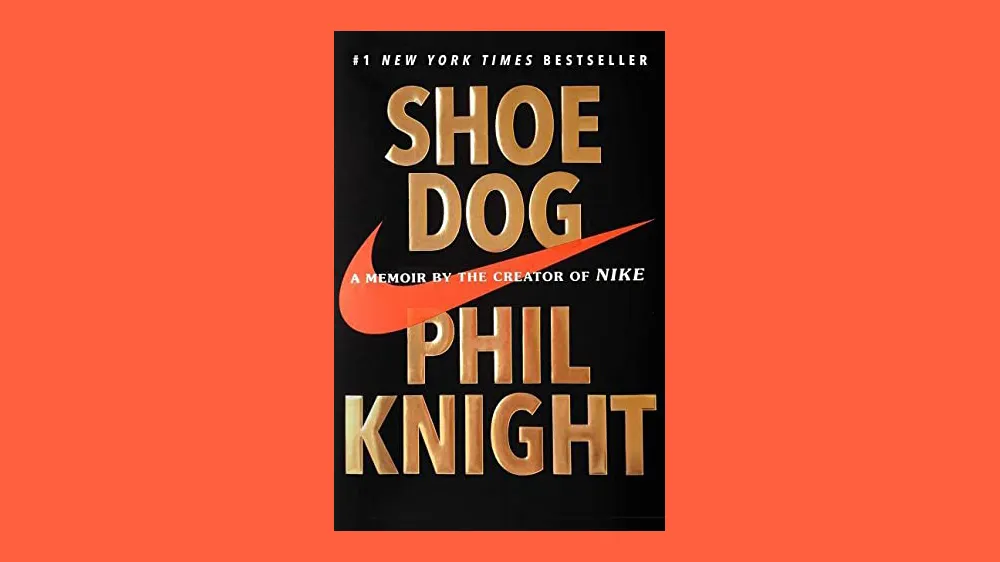
Nike’s swoosh is one of the most recognised logos on earth, built over half a century through cultural storytelling, athletic partnerships, and product craft. I found Phil Knight’s memoir Shoe Dog highly inspirational - capturing the grit and obsession required to build something that truly endures.
Over the past few years, however, the picture for Nike has started to look different. Niche challengers have become established competitors, occupying shelf space and mindshare Nike once owned. In Tokyo, long queues form outside On and Hoka stores - but not outside Nike’s. Even heritage brands like New Balance have staged a revival at Nike’s expense, more than doubling their revenue since 2020.
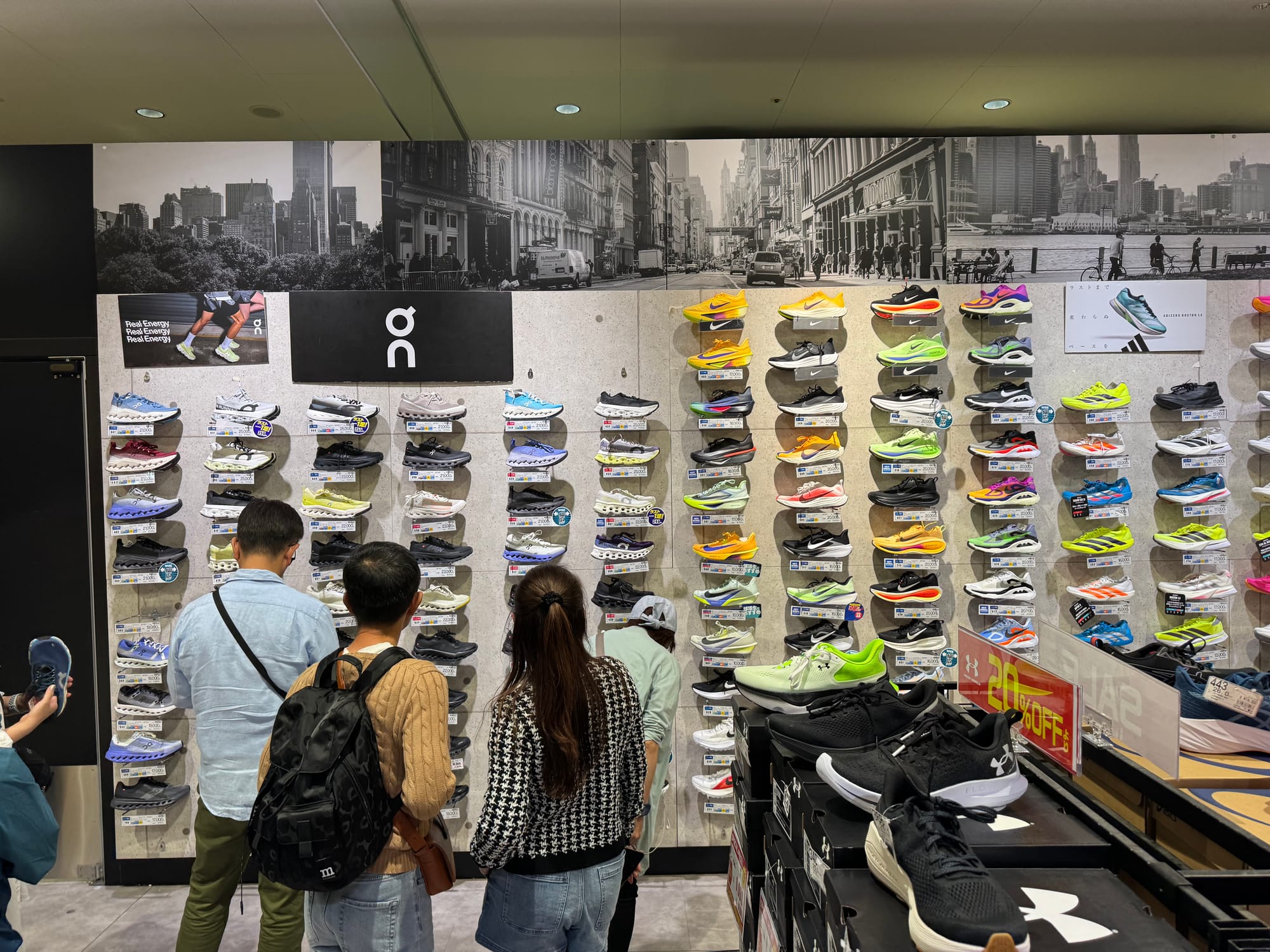
As of April 2026, Nike stock sat below US$45 - a market capitalisation of US$68 billion, its lowest level in over a decade, and a fall of more than 75% from the US$280 billion the company commanded at its 2021 peak.
How does what was once considered one of the widest consumer brand moats in the world, built over half a century, erode over the course of a few short years?
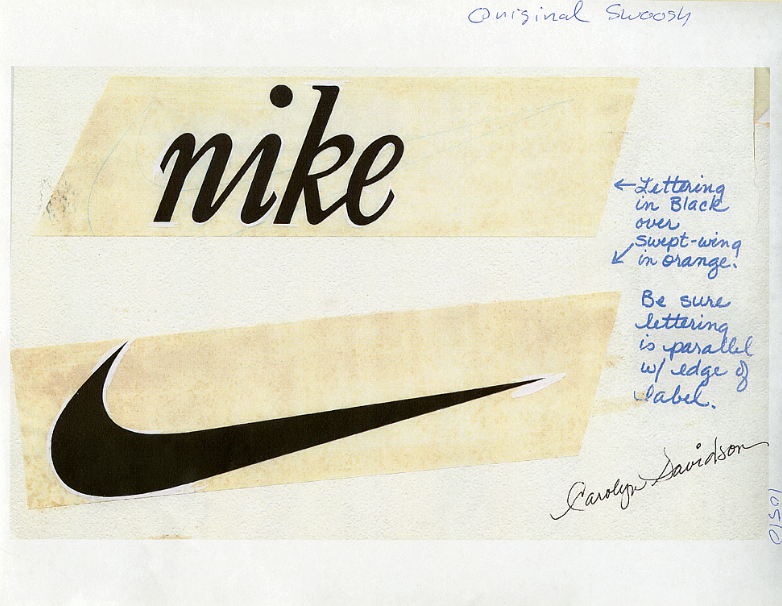
A good starting point is January 2020, when John Donahoe took over as Nike’s new CEO. The board wanted a digital-first operator, and Donahoe had the résumé - ServiceNow, eBay, and Bain - even if he was one of the few leaders in Nike’s history not to have risen through its operating ranks.
Several major strategic shifts followed, each departing from what had worked for Nike for decades - yet each looked like a logical transformational move to take Nike into the 2020s. The financial pay-offs were immediate: gross margins expanded, SG&A came down, and return on ad spend looked sharper quarter by quarter. Wall Street loved it.
Yet each of these moves shared a common mechanism: they improved short-term financial metrics by drawing down assets that had taken decades to build. In effect, Nike was not just transforming its business - it was monetising its moat.
We will examine each in turn.
Trading distribution for margin
Phil Knight started by selling Japanese running shoes out of the boot of his car at track meets. For decades, Nike’s route to market ran primarily through other people’s stores. The company did not open its first branded retail location until 1990, by which point it was already one of the most valuable sportswear brands in the world. Wholesale was the channel through which the brand was built—the primary way a kid in a small town could see, touch, and try on a pair of Jordans.

Those wholesale partners did more than carry inventory and absorb risk. They provided local context, merchandising expertise, and access to customer segments Nike could not efficiently reach on its own. Most importantly, they created physical ubiquity—the compounding advantage of being present wherever consumers chose to shop.
The wholesale relationship also bankrolled the company in its critical early years. In 1972, perpetually short of cash, Phil Knight introduced the Futures program: retailers placed large, non-refundable orders six months ahead of delivery, locking in a discount of up to seven per cent and a guaranteed allocation. The orders gave Nike working capital and demand visibility before a single shoe rolled off the line. What looked like a simple pricing arrangement was, in substance, wholesalers underwriting Nike’s manufacturing.
Under Donahoe, Nike began systematically pulling back from these wholesale relationships. The logic was straightforward: move more volume through direct channels, control the brand experience, and capture more margin.
By September 2021, Nike had exited roughly half its retail partners. Big names like Foot Locker, Zappos, Dillard’s, and Big 5 Sporting Goods saw their allocation of the most sought-after models shrink in favour of Nike’s directly owned stores. Gross profit margins expanded immediately.
The vacated shelf space that followed was quickly and eagerly filled by competitors. Adidas, New Balance, Puma, Hoka, On, Brooks, and Salomon—brands that had suddenly found themselves with prime real estate in the stores Nike had walked away from.
Nike had voluntarily dismantled a distribution footprint cultivated over decades and, in doing so, lowered the barrier to entry for its competitors. Precious shelf space that once took years to earn was handed back in quarters.
Trading expertise for efficiency
Bill Bowerman, the legendary University of Oregon track coach and a co-founder of Nike, was obsessed with making his runners faster. He poured rubber into his wife’s waffle iron to prototype a lighter outsole. He tested shoes on his own athletes, adjusted them based on what he saw on the track, and iterated relentlessly.
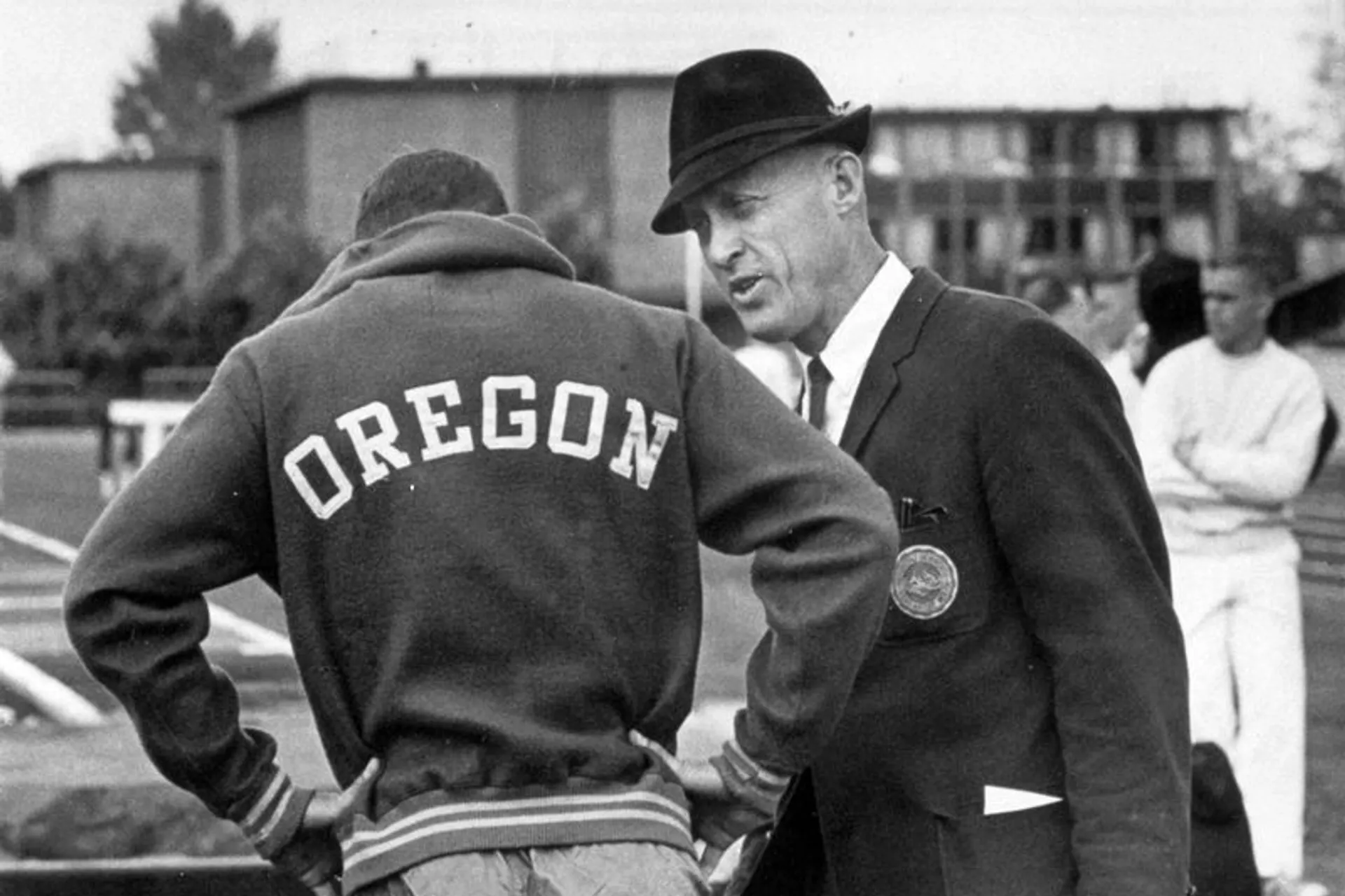
Knight was the business mind, but Bowerman was the product conscience - and the culture he established meant that Nike’s authority in running was earned on the track.
That same model of deep, sport-specific immersion was eventually replicated across basketball, football, tennis, and dozens of other categories. Teams embedded in each discipline accumulated years of insight about athletes, usage patterns, and the fine distinctions that matter in performance products. This kind of expertise accumulates slowly—through proximity to athletes, coaches, biomechanics, and the subtle demands of each sport.
Under Donahoe, Nike restructured around a simpler model: Men’s, Women’s, and Kids. The rationale was familiar—less duplication, cleaner accountability, more consistency across segments—and the resulting redundancies left the org chart looking tidier on paper. Overhead expenses came down immediately.
What it also did was dissolve the sport-by-sport expertise and institutional knowledge accumulated over decades. Product lines that had once been shaped by deep category knowledge were now filtered through broader consumer-demographic lenses.
By flattening sports into customer demographics, Nike levelled itself down to a plane where competitors no longer needed to match its depth. Nike had already come down to theirs.
Trading brand equity for click-through
Nike has long been famous for marketing that built meaning before it chased sales. The ability to turn a product into a cultural moment was arguably Nike’s most valuable and least replicable asset.
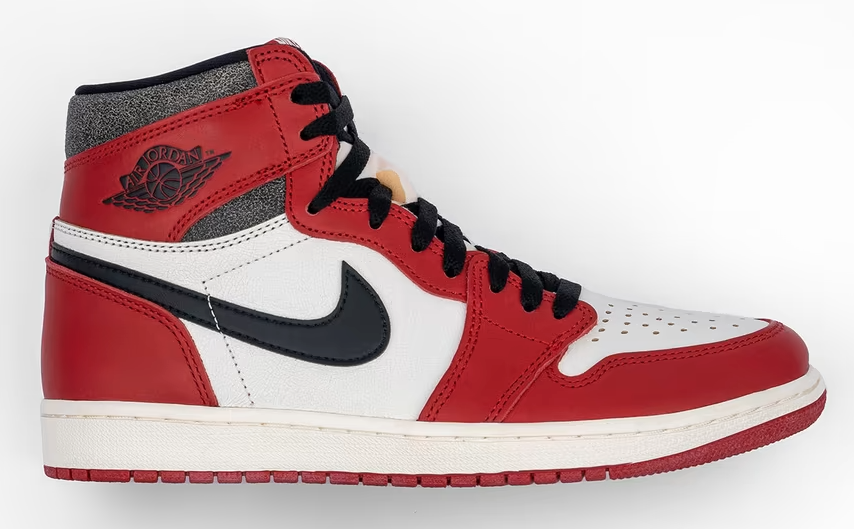
The Banned Air Jordan story is perhaps the purest illustration. In 1984, Michael Jordan wore black-and-red sneakers that violated the NBA’s uniform rules. The league threatened fines. Nike’s response was not to comply—it was to lean in. The company shot a television commercial showing the shoes blacked out by censorship bars, declaring that the league had thrown them out of the game but could not stop you from wearing them. That single ad helped sell 50,000 pairs almost immediately.
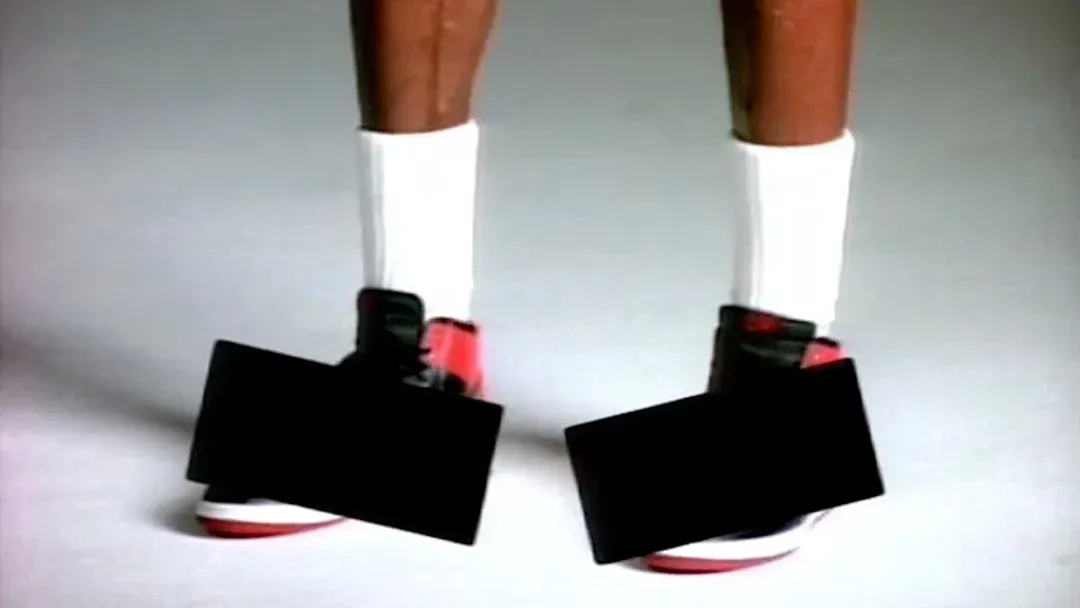
Nike had taken an obscure uniform infraction and turned it into a cultural event—athlete, product, and rebellion fused into a story that consumers wanted to be part of. No click-through rate could have produced that. It was brand storytelling as competitive infrastructure.
The Just Do It campaign operated on the same principle. It was not designed to harvest existing demand. It was an investment in creating demand—broad, emotional, cultural preference that compounded over years and made Nike extraordinarily difficult to substitute.
Under the new model, marketing spend shifted from broad, culture-shaping storytelling into programmatic digital advertising designed to drive traffic to Nike’s own e-commerce channels. Performance marketing has direct, measurable KPIs - but by its nature, it harvests existing demand rather than creating it.
Anyone can pay for web traffic, but doing so does not build a competitive advantage. Just ask the direct-to-consumer startups built on performance marketing in the 2010s that failed to sell to a large incumbent with real distribution before the music stopped.
Brand equity is the slowest-building and most durable layer of any consumer moat - and the easiest to underinvest in, because the returns are diffuse and the erosion is invisible in any single quarter. Nike’s brand was not built by optimising cost per click; it was built by storytelling that made the swoosh mean something beyond product specs.
Few competitors can turn a uniform violation into a global cultural moment; any of them can buy programmatic ads. By shifting spend from the former to the latter, Nike commoditised its own marketing - competing on the same terms as everyone else, in a channel where it had no structural advantage.
Harvesting the moat
What made all of this particularly difficult to see in real time was that each initiative produced financial pay-offs that showed up almost immediately.
Margins improved when the middleman was removed. Costs fell when sport-specific expertise was made redundant. Return on ad spend looked far more efficient.
Nike shares climbed from around $100 when Donahoe took over to an all-time high of $179 in November 2021 - a company valued at roughly $280 billion. The “transformation” was working.
But these gains came from somewhere. They were, in effect, the monetisation of business value painstakingly built over decades: the distribution footprint Knight and his team had cultivated since the 1960s; the product expertise and institutional knowledge that Bowerman’s culture had embedded across dozens of categories; the brand equity that campaigns like the Banned Air Jordan and Just Do It had compounded over generations.
Most business decisions sit on a spectrum between maximising long-term net present value and maximising short-term accounting profit. When the asset being spent is the moat itself, the spending does not show up as a cost. Each of Nike’s three shifts boosted reported profitability immediately and reduced the long-run NPV of the franchise meaningfully. The trajectory of the income statement and the moat moved in opposite directions - but only the income statement was visible quarter to quarter.
By the time a moat’s erosion is visible in the income statement, the damage is already done. Nike is now trying to rebuild what took decades to construct and only years to monetise - reopening wholesale doors it shut, reassembling the sport-specific expertise it dispersed, and reinvesting in the creation of new cultural moments.
Durability emerges from a series of choices about whether to harvest the moat or continue feeding it. The companies that endure are those that sustain this balance over time, even when short-term incentives point the other way.