Patience as Kikkoman’s Competitive Advantage
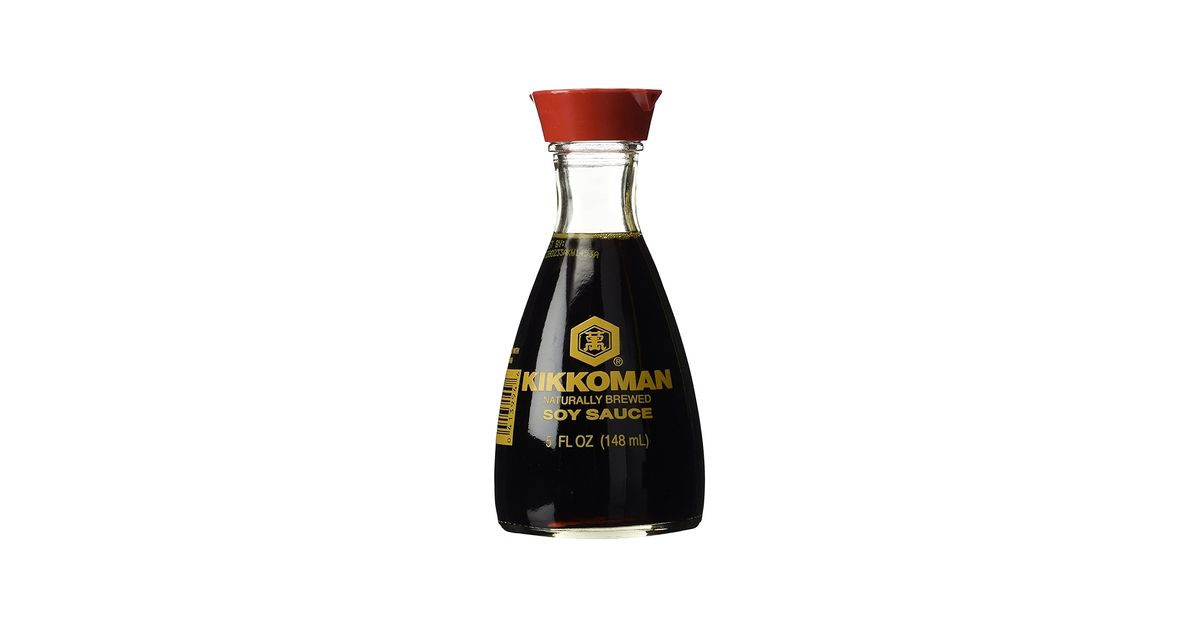
Most people know Kikkoman as the red-capped soy sauce bottle in their pantry or on the restaurant table. Most also know it as a Japanese product made by a Japanese company.
Fewer know that the company behind it is actually a global business — one that earns close to 90% of its profits outside Japan, most of that in the United States - a country where soy sauce was nothing more than an oriental curiosity when Kikkoman established its beachhead in 1957.
I got to know the company behind the red-capped bottle as an investor, covering it for a global investment fund whose remit was to find the most exceptional businesses wherever they can be found in the world. Kikkoman was a core long-term holding for our fund — and few companies I have studied since have impressed me more.
Kikkoman today remains a quintessentially Japanese company — headquartered in Tokyo, still brewing from its hometown of Noda, still guided by the centuries-old Mogi family creed. Economically, though, it is something else entirely: a global business that dominates what is now one of the most popular condiment categories in the world.
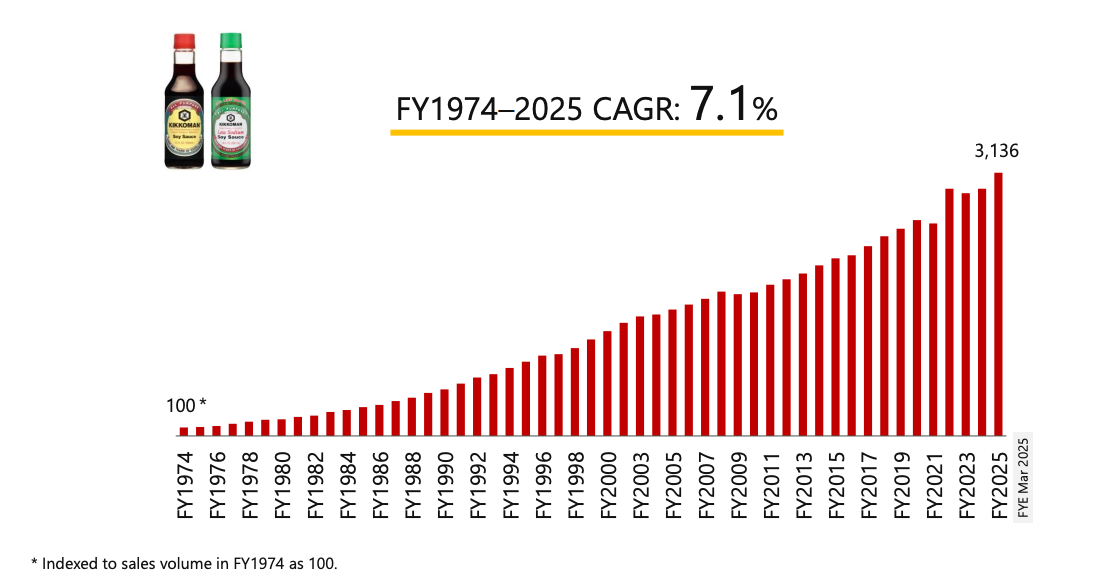
North America was the critical path to globalization for Kikkoman. Kikkoman today generates more than half of group revenue and close to 70% of its profit there. An under-appreciated fact is that Kikkoman was the first Japanese company to establish a manufacturing base in the United States.
Tangible evidence of its universal adoption today can be found in American kitchens. Soy sauce now sits alongside ketchup and mustard in American pantries, and turns up in steak marinades and salad dressings. Kikkoman holds roughly 60% share of the United States soy sauce market with no close second-place competitor — a formidable position in a category that did not really exist in America until Kikkoman created it.
Kikkoman not only built a presence in America from scratch — it single-handedly created the market and became synonymous with the category. It is a study in what market entry looks like when strategy is driven not by quarterly targets or even five-year plans, but as just another step in a journey spanning multiple centuries.
Taking the long path
Since the mid-17th century, the Mogi and Takanashi families had been brewing soy sauce in the city of Noda on the Kanto plain. In 1917, eight of the leading Mogi and Takanashi family soy sauce companies in Noda merged to form Noda Shoyu Co., Ltd. — the direct corporate predecessor of Kikkoman. By the time the company opened its first sales office in San Francisco in 1957, Kikkoman had been making soy sauce in Japan for roughly 300 years.
In 1957, the market for soy sauce in America was almost non-existent. The quick path was to accept that fact and in turn position Kikkoman as a niche import to harvest whatever demand existed in Japanese and Chinese restaurants and grocery stores.
A slightly more ambitious path would be to license the brand or sign a distribution deal — let a General Foods or Heinz figure out how to reach the American consumer and settle for a small but steady royalty cheque with minimal effort and risk.
Kikkoman chose neither. It aimed much bigger and sought to create and grow the market by itself, and most importantly to position its soy sauce as an American condiment on its own terms. Yuzaburo Mogi thought that “soy sauce could become the seasoning of the whole world.”
In November 1956, ahead of the sales office opening, Kikkoman ran a print campaign in the San Francisco Chronicle positioning the bottle as “All-Purpose Seasoning”.
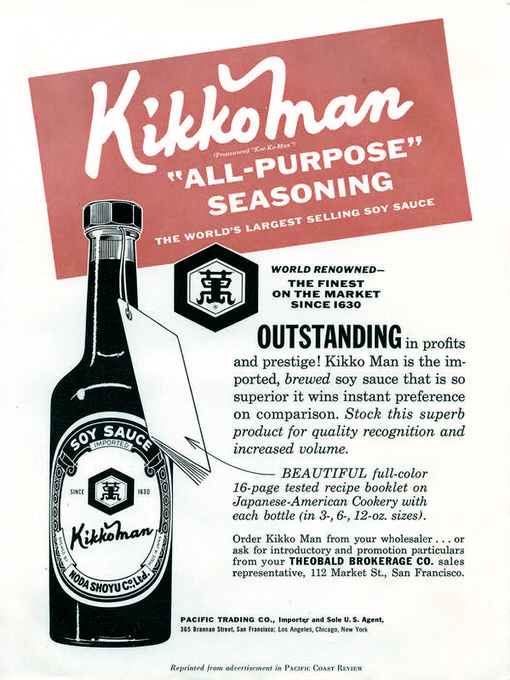
The phrase was added to every Kikkoman label thereafter.
Kikkoman positioned its soy sauce as a domestic American condiment that belonged next to ketchup, mustard and Worcestershire sauce — not as an imported specialty for the “oriental foods” aisle, where every other soy sauce in America sat at the time.
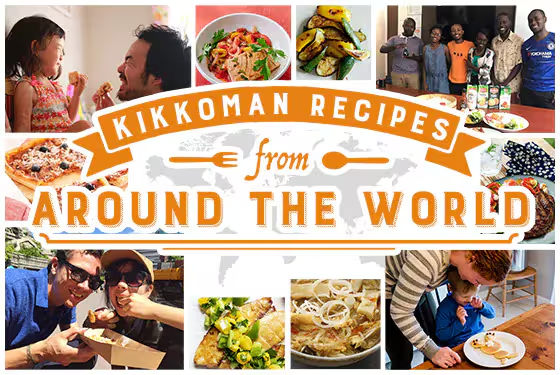
The follow-on positioning was “Delicious on Meat”. Kikkoman sent its own employees into American supermarkets to grill teriyaki-style beef on the spot and hand it out to passing shoppers. The pitch was not “try this exotic Japanese sauce” but “your hamburgers and pork ribs will taste better with this on them”. Recipes were co-developed with American home economists and cookery schools: soy-marinated steaks, Caesar salad variants, barbecue glazes, Thanksgiving turkey brines.
That recipe-development programme has never stopped — Kikkoman still publishes hundreds of new American recipes a year.
From Japanese importer to an American Business
By the late 1960s Kikkoman was shipping enough product into the United States that local bottling had become the better option. From 1968, Kikkoman concentrate was shipped to a Leslie Foods plant in Oakland and bottled there.
In 1969, twelve years into its American foray, Kikkoman acquired a stake in Japan Food Corporation — a San Francisco wholesaler later renamed JFC International. Owning the channel meant Kikkoman set the terms of how its product reached restaurants and retailers, rather than negotiating shelf access through a third party. JFC has since grown into a global Asian-foods wholesaler in its own right now operating more than 20 distribution centres across the United States, Canada and Mexico.
In the early 1970s, the company decided to build its own American brewery — a large multi-year investment project, in a country where it had no manufacturing experience, at a time when no other Japanese companies had built an American factory – Kikkoman became the first major Japanese company to set up manufacturing in the United States.
A committee that included a young Yuzaburo Mogi, the future chairman, screened more than 200 locations, then narrowed to about 60 across Wisconsin and Illinois. The brief was specific: a central location for distribution, abundant clean water, locally grown soybeans and wheat, and a stable, hard-working workforce.
Kikkoman settled on Walworth, a small farming community in southern Wisconsin. As Yuzaburo Mogi described the Walworth decision: “When we set up in Walworth in the early 1970s, we took a risk and made a huge investment.”
The plant opened in 1973 and shipped its first “Made in the U.S.A.” bottles of Kikkoman that summer.
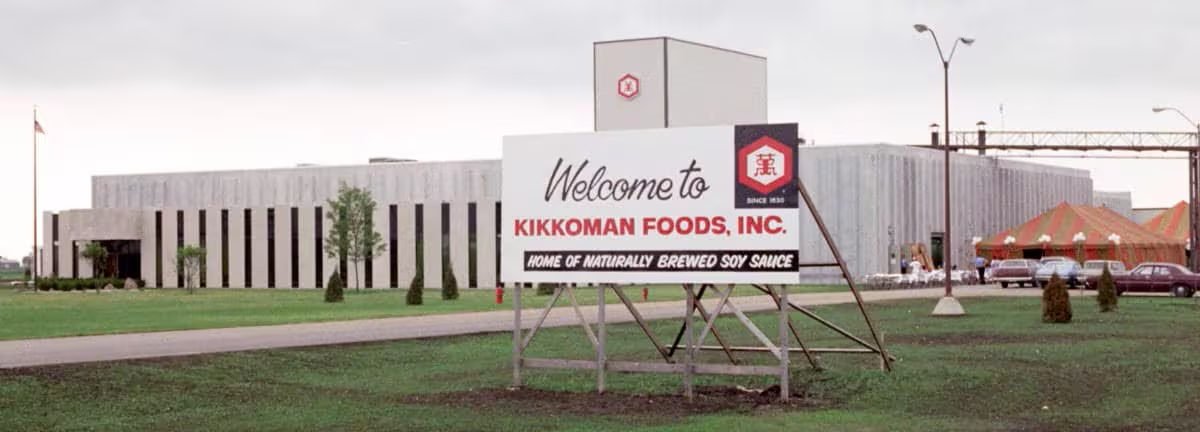
Secondees from Japan were encouraged to integrate into their local communities by living in the same neighbourhoods as Kikkoman’s American employees around Walworth, Elkhorn, Lake Geneva and Williams Bay. The company has invested in the surrounding community ever since — through its corporate foundation, through direct giving to local causes, and through long-running partnerships with regional institutions on agriculture and environmental research.
Yuzaburo Mogi’s framing of this is worth quoting directly: “We’ve been doing business in Noda, Japan, for 360 years. We learned a long time ago that to survive, you need to coexist with the surrounding community.”
The patience to build something durable
What is striking about Kikkoman’s American expansion is the cadence. The company opened its first US sales office in 1957. Its first US plant in 1973. Its second US plant, in Folsom, California, in 1998, 25 years later. Its third US plant broke ground in 2024, 26 years after the second.
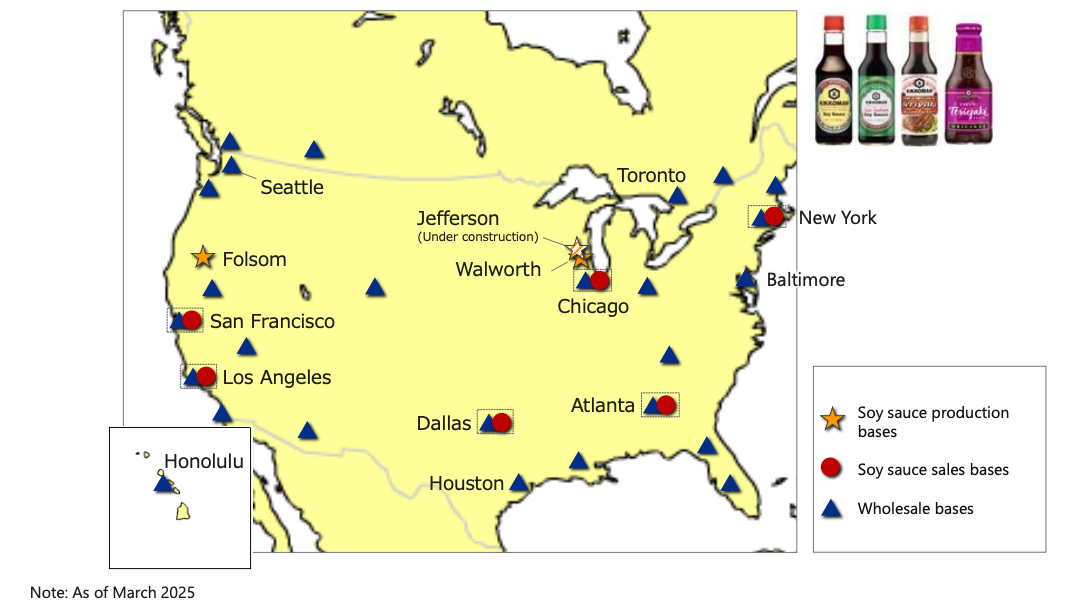
Each expansion came only when sustained demand growth had outrun existing capacity, and each new facility was sited and staffed with the same patience as the original one.
Alongside that physical build-out, Kikkoman invested consistently and continuously in promoting soy sauce as a category and Kikkoman as its default brand — year after year, decade after decade, through advertising, in-store demonstration, recipe development and foodservice partnerships. The cumulative effect is that Kikkoman is now the default soy sauce in America, in much the same way that Heinz is the default ketchup.
Kikkoman’s position in the America today is durable because it was not built quickly and therefore cannot be replicated quickly.
Even if a competing soy sauce brand could match its product, it could not match seven decades of household mindshare, entrenched goodwill in local communities, an owned distribution network reaching every relevant North American retailer and foodservice channel – and a recipe library refreshed every year for decades.
Selling your product into an overseas market has never been easier. List the product on an e-commerce platform, have AI translate and put together your performance ad copy, test and iterate the creative across half a dozen advertising platforms overnight, pay local social media influencers to feature it, and you will generate sales. The short path is more accessible and available than ever, and in turn more crowded than ever.
Which is exactly why Kikkoman’s approach is so instructive today. As the short path gets faster and more accessible to everyone, it also gets more crowded — and the opportunity for an "edge" counter-intuitively becomes much simpler: willingness and ability to adopt a longer time horizon.